
道場TOP ネタ一覧 shoppq道場
Lenovo Yoga 7 Pro-13IKB: Handling the "Singing" Hinge in a Café—With a Lighter Touch
- ◇評価 0ポイント
- ◇閲覧回数 10回
- ◇登録日
- 2026年10月21日
-
- aline
- 道場主
Lv.24
The café table didn’t wobble this time, but as I rested my elbow on it, a faint "creak" emanated from the bottom-left corner of the keyboard. The edges of the Yoga 7 Pro’s palm rest have worn smooth and glossy; under the café’s overhead lights, the sandblasted aluminum surface glints in patches, making the device look younger than its actual age.
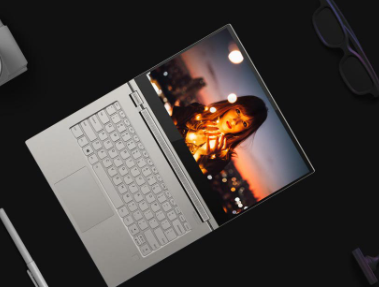
I can’t quite recall why I bought it in the first place. Perhaps it’s because, around 2018, this machine appeared on nearly every "best-looking laptop" list. It boasted a 4K, 13.9-inch display with a pixel density (PPI) of over 300, and bezels so slim it looked as if the screen were simply floating on the glass. Back then, the idea of ​​sitting somewhere with a device like this—just to type—felt like a deliberate, if somewhat irrational, statement. Six-plus years later, that "statement" has long since faded; it has simply become an old machine I occasionally pull out to jot down a few things. Plugged into a nearby outlet is a lipstick-shaped power adapter—not the original one. The bulky, brick-like charger that came with it has long since retired to the depths of some drawer; its weight was a common point of complaint in reviews back in the day.
The most striking feature of this machine is its hinge. Lenovo moved away from its signature "watchband" hinge, replacing it with a "Sound Bar Hinge" that houses two high-frequency speakers. Over two thousand laser-cut apertures line the surface, directing sound toward the screen. When you flip the display, the spatial orientation of the audio remains distinct—unlike most laptops, where the sound would simply become muffled if the screen were turned around. I played a clip to test it: the sound seeped out from the gap in the hinge—not loud, but remarkably clean, carrying a certain, confident clarity that seemed to say, "I know exactly where I’m coming from." On the underside, there are two additional low-frequency drivers, creating a four-channel audio setup—the Dolby Atmos badge was a significant selling point back then. Today, the built-in speakers are really just there to make sound, though at least the sound comes from the right places.
The issue is that by packing components into the hinge, it’s no longer just a hinge. iFixit provides a meticulous guide for replacing the hinge on this model (the C930—essentially the same device under a different name), detailing exactly how to pry open ribbon cables and release clips. Yet, if you look at the comments section or repair forums, you won’t find talk of procedures; instead, you’ll read about flickering screens, loose hinges, and mysterious cracks appearing in the corners. My unit is holding up okay for now—the hinge still has proper resistance, with a distinct, tactile "click" or notch-like feel at 60 and 90 degrees, and it’s stable enough to be opened with one hand without tipping backward. Still, every time I shift it from "tent mode" back to laptop mode, I find myself instinctively lightening my touch as my fingers press against the hinge. It’s hard not to think about the cables buried beneath that metal—cables that are bent and flexed over and over again, day after day.
The screen is the aspect I have the most complicated feelings about. A 13.9-inch 4K display with a pixel density of 315 PPI and 100% sRGB coverage—back in 2018, these specs were enough to justify a 16,000-yuan price tag. Even now, the edges of text remain razor-sharp, the tonal range in images holds up, and the Dolby Vision badge still shines. Battery life, however, is a different story. The manufacturer originally claimed 9.5 hours for the 4K model and 14 hours for the 1080p version—figures derived from lab conditions with the brightness set to a specific level and no background processes running. My unit has gone through countless charge cycles; unplug it, and within an hour of writing, the percentage in the top-right corner begins to plummet at an alarming rate. If I’m in a well-lit coffee shop and turn the brightness up, it drains even faster. It’s like a beautiful vintage car with a voracious appetite for fuel—you hesitate to floor the gas, yet you know the engine would sound magnificent if you did.
As for performance, the i7-8550U is hardly worth discussing by today’s standards. It manages to handle the dozen-plus browser tabs and the document I have open, though the fan kicks in occasionally—quietly, mind you. The exhaust vent is tucked near the hinge, directing warm air toward the screen. Under full load, it could reach temperatures in the seventies, but that’s a figure from reviews back in the day; honestly, I have no desire to push it that hard now. It’s "sufficient"—only because my expectations have dropped well below that threshold. Few people bought this machine for its raw performance; they bought it for the display, that "singing" hinge, and the glass-covered lid that could turn the exterior into a canvas for a piece of art. Six years later, some of these features remain, while others have evolved into a subtle, lingering hesitation—a tiny pause—every time I open or close the lid.
As I fold it shut, the hinge emits a soft, distinct *click*—not a malfunction, but a deliberate, tactile "detent" designed into the mechanism. The screen goes dark, and the aluminum lid returns to being a silent, solid slab. It’s no longer a "productivity tool"—at least, not for me, and certainly not anymore. It’s the kind of machine you remember for its hinge, yet also the kind that makes you a bit wary of that very same hinge. The crowd in the café has turned over, my coffee has gone cold, and the battery still has about thirty percent charge left.
LENOVO 7630mAh 7.68V L17M4PH1 Battery for Lenovo Yoga 7 Pro-13IKB C930
|
|
【キーワード】
登録されていません
|

|
  |
ブログ? そんなの必要ありません! 今日から、いきなりアフィリエイトスタート!
【まにあ道アフィリエイト】まにあ道ならAmazonアソシエイトIDを利用してネタを書くだけで、お気軽に始めていただけます。


-

-
 Lenovo Yoga 7 Pro-13IKB: Handling the "Singing" Hinge in a Café—With a Lighter Touch(0)
aline
(道場主)





 シュリのおすすめネタ
 この道場の人気ネタ
-
New battery IBR009NA 5000mAh/19Wh 3.8V... -
New Battery Laptop Batteries SONY 10.8... -
New Battery Tablet PC Batteries FUJITS... -
ASUS C21N1903 Laptop Batteries: A wis... -
New battery SQU-2006 4170mAh/63.05WH 1...
このネタをソーシャルブックマークに登録する
 まにあ道の人気ネタ
-
ウサビッチ キレネンコのキレ場面集 -
FHPK26106133P Tablet Battery for Black... -
New battery IBR009NA 5000mAh/19Wh 3.8V... -
惜しい凡作「ひとひら」 -
High quality SUNMI 3000mAh/11.4Wh 3.8V...
コメントはまだありません。