
道場TOP ネタ一覧 shoppq道場
Bose S1 Pro vs. Pro+: The Original Holds Its Own in Sound, Though It Lacks Some Refinement
- ◇評価 0ポイント
- ◇閲覧回数 35回
- ◇登録日
- 2026年10月19日
-
- aline
- 道場主
Lv.24
The Bose S1 Pro is the kind of device that might make you think, "Is that it?" at first glance—only to leave you pleasantly surprised the moment it starts playing. This sense of contradiction is woven into nearly every design detail: it manages to push out a continuous sound pressure level (SPL) of 103 dB from a compact frame—housing a 6-inch woofer and three 2.25-inch tweeters—yet it also features shortcomings, such as noticeable Bluetooth latency and a build quality that might make you raise an eyebrow.
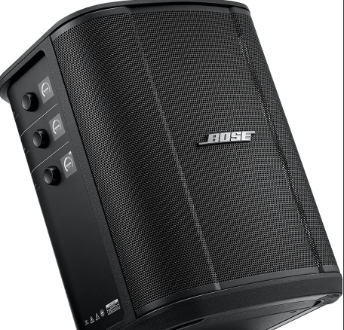
Let’s start with the basics. Weighing in at 15.5 pounds (about 7 kg), it’s portable enough to carry in a backpack—provided your shoulder straps are up to the task. It includes a built-in three-channel mixer: channels 1 and 2 feature combo XLR/TRS inputs with ToneMatch presets (for vocals/guitar), two-band EQ, and reverb, while channel 3 handles 3.5mm or Bluetooth input. The battery is rated for 11 hours of use and takes 2.5 hours to fully charge. It typically retails for around $500; on the used market, prices vary based on battery health and overall condition—I’ve seen units with batteries go for just over $400.
The "multi-position" capability offers much more than just four different physical orientations. Whether placed upright on a table, tilted back, laid on its side as a stage monitor, or mounted on a 35mm speaker stand, the device uses internal sensors to detect its position and automatically adjust its EQ. In practice, the tilted mode is genuinely useful when you’re standing close to the unit; instead of the sound hitting you squarely in the chest, it’s directed upward toward your face. When laid on its side as a monitor, it forms a low-profile wedge that doesn’t take up much space at your feet, providing clear monitoring for vocals and guitar during live performances. A small caveat, however: the automatic EQ adjustment shifts the overall frequency response, but it’s not a universal fix-all. If you place it against a wall while in its tilted-back position, low-frequency buildup is inevitable; Auto EQ cannot compensate for room reflections.
The sonic impact is genuine, yet the signature "Bose sound" comes with certain trade-offs. A review in *Sound on Sound* hits the nail on the head: the sound pressure level and balance it maintains for its size are "surprising." It reaches down to 62 Hz—not through artificial DSP-driven bass enhancement, but with a low end that retains clear definition. Users on Reverb have noted that the bass is "quite substantial for its size." Conversely, *Consumer Reports* offers a different perspective: while the low end has punch, it tends to be "boomy" and "loose"; the midrange—vocals and guitars—can sound "a bit muddy and crowded"; and while the high-frequency extension is sufficient, there is a noticeable "fuzziness" or lack of refinement. It would be a mistake to use this as a studio reference monitor; it is a tool designed to project sound outward, not to dissect fine details. If you plug a guitar directly into Channel 1 and set the ToneMatch to the "guitar" preset, the resulting sound is ready for use immediately—no need for an array of external preamps. This is a major convenience for small-scale live performances.
The battery is central to the unit’s "street-performer" appeal, though you’ll need to adjust your expectations based on real-world usage rather than the manufacturer’s specs. The official 11-hour rating applies only to ideal conditions. Street performers who have conducted detailed tests report that at 50% to 60% volume, it lasts roughly 4 to 6 hours; push it beyond 75% to cut through ambient noise, and that runtime drops to around 3 hours—or even less. This isn't a flaw unique to the S1 Pro; for any battery-powered PA system, power consumption spikes non-linearly at higher sound pressure levels. If you’re planning an outdoor performance lasting longer than two hours, having access to mains power or a backup power source isn't just an option—it’s a necessity. Additionally, the battery compartment requires a screwdriver to open—a significant step down in convenience compared to the "press-to-release" design found on the JBL EON One Compact.
You have to accept that the unit has a distinctly "plasticky" feel. It’s not flimsy enough to fall apart on its own, but the casing is relatively soft and prone to scratches. Furthermore, all the ports are completely exposed, with no official IP rating for dust or water resistance. It’s perfectly fine for indoor use or in sheltered environments, but if you toss it into the back of a van alongside stands and cables, it will show signs of wear and tear very quickly. The speaker grille is made of thin metal and flexes slightly when pressed. In short, the unit’s durability relies on you treating it like a piece of delicate equipment rather than a rugged, heavy-duty tool.
While Bluetooth can be used for backing tracks, it isn't suitable for real-time performance synchronization. It lacks support for aptX and is limited to Bluetooth 4.0; as noted quite bluntly on the official forum, the latency is too high for real-time monitoring or live performance. It works perfectly fine for playing background music or interlude tracks from your phone, but if you try to route your guitar or microphone signal back to yourself via Bluetooth, you’ll clearly notice a delay—the sound lags behind your playing. For scenarios requiring low latency, stick to a wired connection using an XLR or 3.5mm cable.
When comparing this unit to the JBL EON One Compact, the choice doesn't come down to which one is "better," but rather how you prefer to shape your sound. The general consensus among users is that the Bose offers a more polished, "ready-to-go" sound right out of the box—guitars and vocals sound great with just a few minor tweaks. The JBL, meanwhile, features an 8-inch woofer that physically delivers deeper low frequencies and a greater sense of room-filling sound; however, this assumes you’re willing to use the companion app to adjust the EQ—an app whose stability and logic often make for a frustrating user experience. The Bose lacks a master volume knob, with each channel controlled independently, whereas the JBL includes one. And, as mentioned, the Bose requires a screwdriver to swap out the battery, while the JBL does not. This isn’t a matter of which one sounds better; it’s about how intuitive and seamless the device feels during daily use.
There’s also a chronological reality to consider: the S1 Pro has been superseded by the S1 Pro+—which is about a pound lighter, features an OLED display, offers more granular channel control, and supports remote operation via an app. If you’re buying brand new, the Pro+ is the more logical choice. However, if you can find a used S1 Pro at a significantly lower price—and you don’t need those extra features—rest assured that the original model hasn’t been left behind in terms of core sound quality. It remains a unit laser-focused on the goal of "delivering big sound from a compact footprint." That focus, however, comes with trade-offs: specifically regarding battery life, build materials, and the headroom for wireless connectivity—though it’s still more than capable of letting you perform an unplugged set for an audience of fifty, thanks to its 6-inch woofer.
BOSE 5500MAH 14.4V 078592 789175-0110 Battery
|
|
【キーワード】
登録されていません
|

|
  |

|
ブログ? そんなの必要ありません! 今日から、いきなりアフィリエイトスタート!
【まにあ道アフィリエイト】まにあ道ならAmazonアソシエイトIDを利用してネタを書くだけで、お気軽に始めていただけます。


-

-
 Fujitsu FPB0354 CP794551-01 Laptop Batteries: A wise choice to improve equipment performance(0)
aline
(道場主)





 シュリのおすすめネタ
 この道場の人気ネタ
-
New battery IBR009NA 5000mAh/19Wh 3.8V... -
New Battery Laptop Batteries SONY 10.8... -
New Battery Tablet PC Batteries FUJITS... -
ASUS C21N1903 Laptop Batteries: A wis... -
New battery SQU-2006 4170mAh/63.05WH 1...
このネタをソーシャルブックマークに登録する
 まにあ道の人気ネタ
-
ウサビッチ キレネンコのキレ場面集 -
FHPK26106133P Tablet Battery for Black... -
New battery IBR009NA 5000mAh/19Wh 3.8V... -
惜しい凡作「ひとひら」 -
High quality SUNMI 3000mAh/11.4Wh 3.8V...
コメントはまだありません。