
TOP > コンピュータ > machii-little道場 > ネタ
道場TOP ネタ一覧 machii-little道場
The Nokia Lumia 920: A "Brick" You Can Use While Wearing Gloves in Winter
- ◇評価 0ポイント
- ◇閲覧回数 13回
- ◇登録日
- 2026年10月7日
-
- machii-little
- 道場主
Lv.31
The Lumia 920 was released in late 2012, around the same time as the iPhone 5. Nokia was already struggling by then, but this device gave the impression that they still wanted to create something genuinely well-made.
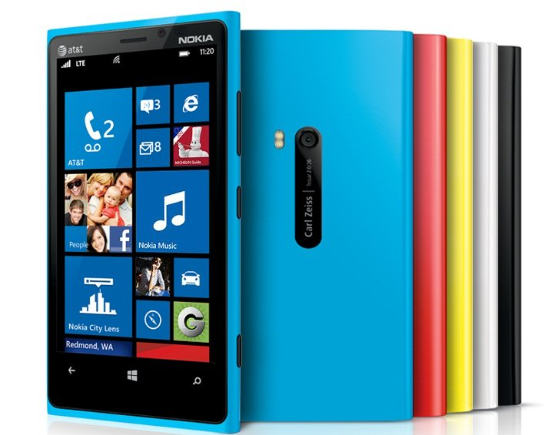
Let's start with the feel in the hand. It weighed 185 grams and was 10.7 mm thick. To put that in perspective, the iPhone 5 weighed 112 grams and was 7.6 mm thick; side-by-side, it was like comparing a brick to a thin wafer. I used it for about six months, and when I eventually switched phones, my first reaction was, "Why is this so light?" It featured a unibody polycarbonate design with a curved back, offering a secure, non-slip grip. However, it felt heavy in my pocket, often dragging my trousers down and forcing me to pull them up every now and then while walking.
The screen was a 4.5-inch IPS LCD with a resolution of 1280×768 and a pixel density of 332 ppi. That density was slightly higher than the iPhone 5's 326 ppi, resulting in a truly crisp display. Nokia incorporated "ClearBlack" and "PureMotion HD+" technologies, ensuring visibility even under direct sunlight outdoors. Its standout feature was the ultra-sensitive touchscreen, which worked while wearing gloves or even when using a fingernail. This was incredibly practical during winters in the north, as I didn't have to take off my gloves to answer a call.
Then there was the camera—the 920's biggest selling point. It boasted an 8.7-megapixel sensor, an f/2.0 aperture, Carl Zeiss optics, and Optical Image Stabilization (OIS). It was the industry's first smartphone to feature OIS. Unlike digital image stabilization, OIS compensates for hand shake by physically moving the entire camera module, utilizing a system of springs and a precision-engineered structure.
Its low-light performance was truly impressive. I tested it in a completely unlit stairwell, and the resulting photo clearly showed the fire hydrant sign on the wall. In auto mode, night shots tended to be brightened significantly; dark areas looked more like dusk—while not entirely true-to-life, at least the details were visible. Daylight photography was solid, with natural color reproduction that wasn't overly saturated like Samsung's phones at the time. The physical shutter button felt mediocre; it was a bit stiff, requiring significant force to press, which often caused the phone to shake. Autofocus speed was also on the slower side, sometimes taking a full second to lock onto the subject.
Wireless charging was another feature that was rare at the time. The 920 supported the Qi standard, allowing it to charge on a pad without plugging in a cable. Nokia released a range of wireless charging pads back then—including a collaboration with Fatboy that looked like a beanbag chair. However, charging speeds were slow, and leaving NFC enabled caused the battery life to plummet. Tests showed it could only last six hours with NFC on, and the back of the phone would get hot. With NFC turned off, it retained 62% battery after 10 hours of standby. Consequently, I made a habit of turning NFC off whenever I wasn't using it.
With a 2,000 mAh battery, it barely lasted a full day of normal use. Heavy usage—like keeping mobile data on while browsing the web—meant hunting for a charger by the afternoon. While this battery performance wasn't great for 2012, it was still usable.
It ran on Windows Phone 8. The "Live Tiles" interface looked great and ran smoothly, with no stuttering when scrolling. However, the app ecosystem was a major weak point. There was no Instagram or Snapchat; domestically, while WeChat and QQ were available, updates were slow, and the interfaces were far more basic than their Android counterparts. Back then, my friends were all using Instagram to share photos, but I had to rely on third-party clients, which offered a much poorer experience. *Candy Crush* didn't arrive on Windows Phone until 2014—a two-year delay.
There were a few other minor issues. Volume controls weren't separated; turning down the music volume also lowered the ringtone volume, which was quite annoying. The speaker wasn't loud enough—navigation prompts were hard to hear in the car—and the audio quality for external playback was just average, falling short of the iPhone models from the same era.
The 920T was the version customized for China Mobile. The processor was swapped from the international version's MSM8960 to the MSM8260A, and the GPU changed from the Adreno 225 to the Adreno 320. These changes had little impact on performance, and the difference was imperceptible during daily use. In terms of network support, it covers TD-SCDMA and GSM but lacks WCDMA compatibility. China Mobile users can access 3G, whereas China Unicom users are limited to 2G. Regarding the camera, while the spec sheet lists 8.7 megapixels—matching the international version—the actual effective resolution is 8 megapixels. The maximum photo resolution is 3264×2448, slightly lower than the international version's 3552×2448.
The 920T launched at 4,599 yuan, debuting at Suning. At the time—late 2012—that price point put it on par with the iPhone 5.
There were a few aspects of the user experience that I found particularly bothersome. First was the weight; at 185 grams, it caused wrist fatigue during prolonged use, especially when browsing while lying down. Second was the app situation; whenever someone recommended a new app, my first thought was, "Is there a Windows Phone version?"—and more often than not, the answer was no. Third was the heat; the back of the device would get noticeably hot during gaming or GPS navigation.
However, it offered features that other phones couldn't match. Being able to use the touchscreen while wearing gloves in winter was genuinely convenient. Optical Image Stabilization (OIS) provided great stability for night photography, allowing for clear handheld shots even with a 1/4-second shutter speed. Wireless charging, while slow, offered a satisfying convenience—simply placing the phone down to charge meant no fumbling for cables in the dark.
Microsoft eventually abandoned the Windows Phone platform entirely, leaving the 920 as a device with no future. Yet, purely in terms of hardware and the user experience of that era, it was ahead of its time. OIS and wireless charging are now standard on smartphones, and Samsung later adopted the glove-friendly touchscreen feature as well. Nokia had incorporated these technologies into the 920 years in advance; it was simply the operating system that held it back.
Cell phone battery BP-4GW For Nokia Lumia 920 920T
|
|
【キーワード】
登録されていません
|

|
  |
ブログ? そんなの必要ありません! 今日から、いきなりアフィリエイトスタート!
【まにあ道アフィリエイト】まにあ道ならAmazonアソシエイトIDを利用してネタを書くだけで、お気軽に始めていただけます。


 The Nokia Lumia 920: A "Brick" You Can Use While Wearing Gloves in Winter(0)





 シュリのおすすめネタ
 この道場の人気ネタ
-

Laptop battery AEC485494-1S2P RTDPART ... -
616-0640 Lithium-ion battery pack for ... -
Amazon Fire HD 10 (11th Gen) T76N2B -
BA1801CB Bluetooth speaker battery pac... -
Battery replacement for MOTOROLA NNTN8...
このネタをソーシャルブックマークに登録する
 まにあ道の人気ネタ
-
mobile phone battery for RUGGEAR BL100... -
佐野ひなこさん ~ブレイク必至のツインテール美女~ -
VIVO B-O1 handy akku 4420mAh/17.10WH 3... -
Wysokiej jakości Baterie smartfon... -
DiorスマホカバーiPhone18 Duo シュプリーム LVエアーポッズ...
コメントはまだありません。