
道場TOP ネタ一覧 shoppq道場
Huawei U8800: An Underrated Domestic Android "Modding Legend"
- ◇評価 0ポイント
- ◇閲覧回数 8回
- ◇登録日
- 2026年8月17日
-
- aline
- 道場主
Lv.23
Around 2011, the Chinese smartphone market was at a critical juncture, transitioning from feature phones to smartphones. At the time, the iPhone commanded a premium price, and mid-range models from Samsung and HTC often cost between 3,000 and 4,000 yuan, while most domestic phones were still stuck in the era of "shanzhai" (knock-off) devices based on MTK chipsets. It was during this window that Huawei launched an Android phone with an accessible price point and well-balanced specifications: the Huawei U8800 (known internationally as the IDEOS X5). It not only became the first Android phone for many young Chinese users but also earned the reputation of a "legendary device for modding" (or "ROM flashing") within enthusiast circles, thanks to its open ecosystem.
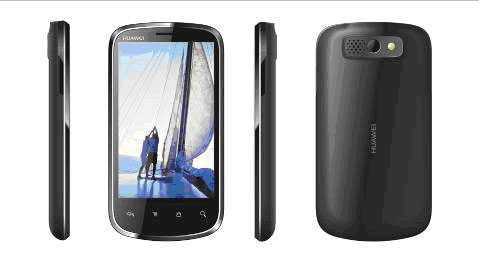
I. Specifications and Design: "Class-Leading" Specs in the Mid-Range Price Bracket
By the standards of the time, the U8800's hardware was far from shabby:
Processor: Qualcomm MSM7230, clocked at 800MHz, with Adreno 205 GPU
Memory: 512MB RAM + 4GB ROM, with microSD expansion support
Display: 3.8-inch WVGA (800×480) TFT screen
Camera: 5-megapixel rear camera with LED flash
Battery: 1500mAh (removable)
Network: China Unicom 3G (WCDMA), Wi-Fi support
It launched at a price of around 2,000 yuan, eventually dropping to under 1,500 yuan. Compared to Nokia Symbian models or low-end Android phones in the same price range, the U8800 held a distinct advantage in screen resolution, GPU performance, and system openness. Its metallic-finish battery cover and rounded body contours also gave it a more premium feel than typical phones in this price segment.
II. System and Experience: Conservative Official Software vs. Bold Community Modding
The U8800 shipped with Android 2.2 Froyo, and an official upgrade to Android 2.3 Gingerbread was provided later. Its user interface closely resembled stock Android, and its fluidity was decent for the time; however, the combination of 512MB of RAM and Huawei's relatively conservative system optimization often led to stuttering during multitasking. Memory resources would quickly run low, especially after installing apps like WeChat, QQ, and Weibo. However, the true appeal of the U8800 lay in its potential for tinkering. Although the Qualcomm MSM7230 processor was clocked at 800MHz by default, the chip had excellent headroom; many third-party kernels supported overclocking to 1GHz or even higher. Coupled with Huawei’s relatively relaxed restrictions on the bootloader, ported versions of third-party ROMs—such as CM7, MIUI, and LeWa OS—soon appeared on online forums. For users who enjoyed getting hands-on, the U8800 was like an affordable yet high-potential "development board."
III. Case Study: College Student A-Kai and His Three Years with the U8800
In September 2011, A-Kai, then a college freshman, used money saved from a summer job to buy a Huawei U8800. It was the first Android phone he had ever owned. His reason for choosing it was simple: a roommate had spent nearly 3,000 yuan on an HTC Desire, whereas the U8800 cost only 1,799 yuan yet offered comparable specifications.
The initial experience wasn't perfect. The official Android 2.2 system suffered from occasional stuttering, and frame rates would drop if more than two apps were running in the background. After seeing flashing tutorials shared on forums like "GFan" and "Android Forum," A-Kai decided to give it a try. He first used official tools to upgrade the system to Android 2.3, then flashed a "stripped-down" (de-bloated) ROM to remove unnecessary pre-installed software. This significantly reduced memory usage and made running games like *Fruit Ninja* and *Angry Birds* much smoother.
What truly got A-Kai hooked was the third-party port of MIUI. He recalls that after flashing MIUI, features like the lock screen, theme store, and notification shade toggles made him realize for the first time just how fun a smartphone could be. In pursuit of even smoother performance, he followed forum tutorials to flash an overclocked kernel, stably pushing the CPU to 1.1GHz and boosting GPU performance in the process. The trade-off was increased heat and battery drain—reducing battery life from a full day to just half a day—but he thoroughly enjoyed the process.
On one occasion, A-Kai flashed an incompatible ROM; the phone got stuck on the startup logo and wouldn't boot into the system. He feared he had "bricked" the device and was so distressed he couldn't sleep. The next day, he stumbled upon a forum post detailing "forced flash mode": by holding down the volume and power buttons while the phone was off, one could access a pink-screen interface to re-flash the official firmware via a data cable. He followed the steps, and half an hour later, the phone was back to life. That experience cured him of any fear of tinkering with the device; he also mastered essential skills like backing up the IMEI and flashing third-party recovery software.
The U8800 stayed with Akai throughout his freshman year. He used it to snap photos of club activities, record videos of playing basketball with his roommates, and even read several novels while on the train. By the second semester of his sophomore year, Akai had upgraded to a Huawei Ascend P1. The U8800, meanwhile, was re-flashed with a simplified "senior-friendly" OS and sent back home for his father to use for another two years. To this day, Akai still keeps the U8800’s original box and a spare battery in his drawer.
IV. Community and Legacy: What Did the U8800 Leave Behind?
Akai’s story was far from unique. Between 2011 and 2013, the U8800 enjoyed a highly active presence in both domestic and international "ROM-flashing" communities. XDA Developers dedicated a specific section to the device, while Chinese forums like Gfan and Hiapk saw users sharing a wealth of ROMs, kernels, and "unbricking" tutorials. Many future Android enthusiasts learned the ropes—flashing, rooting, modifying system files, and even embarking on careers in software development—starting with the U8800.
From an industry perspective, the significance of the U8800 cannot be overlooked. It was a pivotal product in Huawei’s transition from producing low-end, carrier-customized handsets to establishing its own brand of mid-range devices. It demonstrated that a domestic manufacturer could deliver an Android phone with mainstream international specifications for under 2,000 yuan, thereby building the user reputation and channel confidence that paved the way for the subsequent rise of Huawei’s Ascend P and Mate series.
Of course, the U8800 was far from perfect: its screen had mediocre viewing angles, its camera struggled in low-light conditions, and official system updates were sluggish. Yet, it was precisely these shortcomings that fueled the flourishing of the enthusiast community. Users were willing to invest time in learning about and tinkering with a device that held potential; this experience of "growing alongside the machine" is something that today’s highly closed and optimized smartphones can hardly replicate.
Conclusion
The Huawei U8800 emerged during the "Wild West" era of Chinese smartphones; for many, it served as the starting point for their journey with Android and acted as a stepping stone for domestic phones to break into higher-end markets. Looking back now, its technical specifications are long outdated, yet the mark it left on the custom ROM culture, user communities, and the brand's own transformation remains worthy of remembrance. Users like Akai learned patience, the spirit of exploration, and problem-solving skills through the U8800—lessons that were perhaps even more valuable than the phone itself.
HUAWEI 1500mAh/5.6WH 3.7V HB4F1 Battery for Huawei U8800
|
|
【キーワード】
登録されていません
|

|
  |
ブログ? そんなの必要ありません! 今日から、いきなりアフィリエイトスタート!
【まにあ道アフィリエイト】まにあ道ならAmazonアソシエイトIDを利用してネタを書くだけで、お気軽に始めていただけます。


 Huawei U8800: An Underrated Domestic Android "Modding Legend"(0)





 シュリのおすすめネタ
 この道場の人気ネタ
-

New battery IBR009NA 5000mAh/19Wh 3.8V... -
New battery LIU3256125PHVUTL 7700mAh/2... -
New Battery Laptop Batteries IPASON 11... -
New Battery Medical Equipment Batteri... -
New Battery Headphones Batteries SENA...
このネタをソーシャルブックマークに登録する
 まにあ道の人気ネタ
-
パクリ?偶然?尾田栄一郎「ワンピース」 宮崎駿「風の谷のナウシカ」からの影響... -
Buy HUAWEI HB431622EFW Smart Watch Ba... -
Bateria SONIM BAT-05000-21 do SONIM Sm... -
New LAND_ROVER LR46049 Compatible Batt... -
New battery IBR009NA 5000mAh/19Wh 3.8V...
コメントはまだありません。