
道場TOP ネタ一覧 shoppq道場
Youth on the Keypad: The BlackBerry Bold 9000 and Real Memories of the "Typing Era"
- ◇評価 0ポイント
- ◇閲覧回数 4回
- ◇登録日
- 2026年9月1日
-
- aline
- 道場主
Lv.23
In the days before smartphones were dominated by edge-to-edge screens and virtual keyboards, the BlackBerry Bold 9000 held a unique place. It was more than just a phone; it was a status symbol, a communication tool, and a "mini-computer" resting in the palms of many. Looking back today, its technical specifications are long outdated, yet the muscle memory and fragments of life associated with it remain vivid.
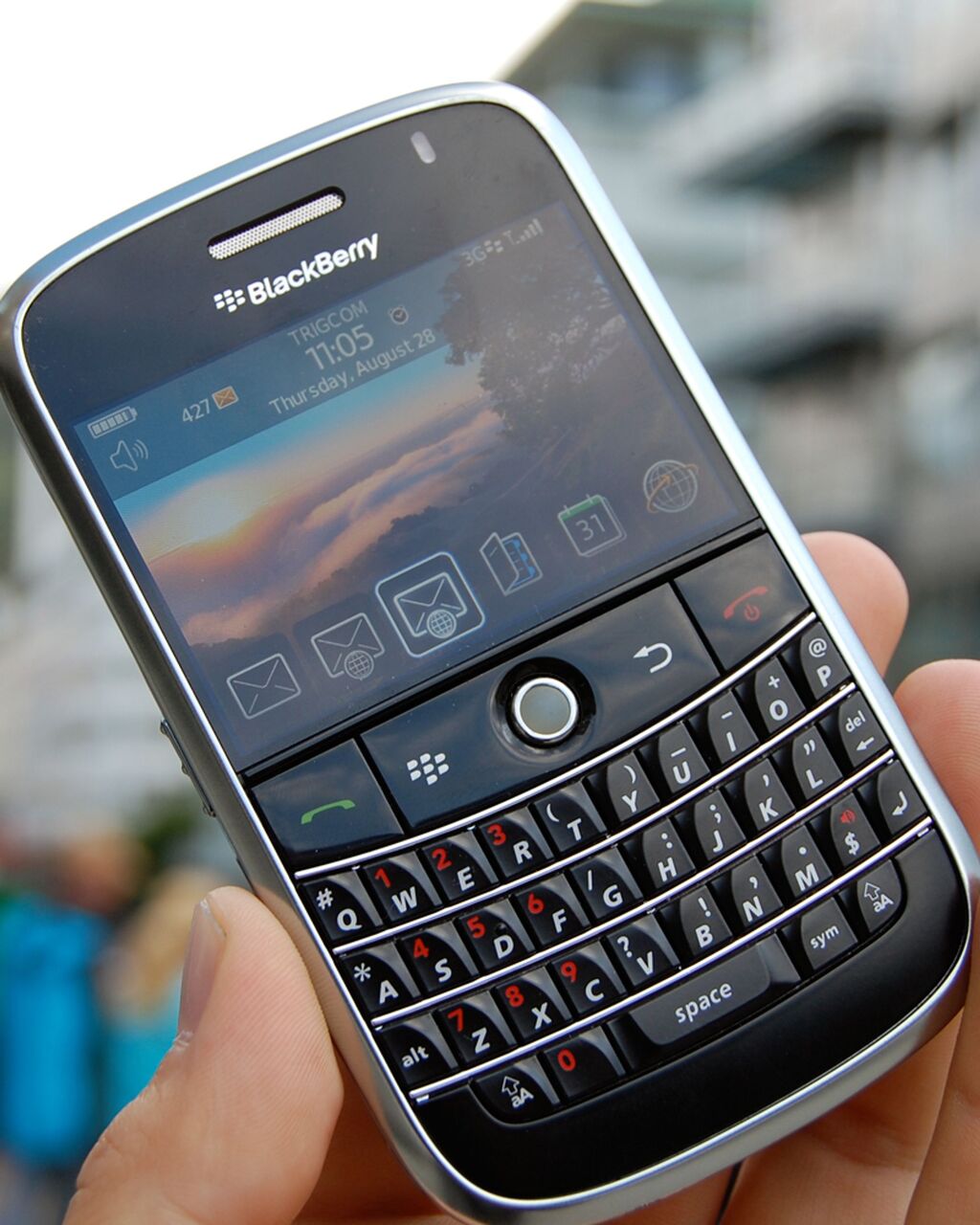
"Answering emails during meetings without looking at the screen": The daily routine of an investment banking analyst
In 2009, Lin Zheng, a junior analyst at an investment bank in London, was issued a BlackBerry 9000 on his very first day. During training, his supervisor said just one thing: "Your life for the next three years will revolve around this device."
That statement was no exaggeration. At the time, he handled over 300 work emails a day, most requiring a response within ten minutes. The BlackBerry 9000’s full QWERTY keyboard became his key asset. Although the keys were small, they were contoured and offered crisp tactile feedback, giving his fingers a satisfying, solid "click" with every press. Within a month, he had mastered the art of typing emails blindly beneath the conference table—his eyes fixed on the presentation slides while his hands tapped out messages like "Will revert with updated numbers by 5pm" on his lap.
"The most extreme instance was when I was rushing to draft an urgent reply in a taxi; the London roads were full of potholes, and the car kept bouncing. I finished the email relying entirely on muscle memory, and when I got out and checked, there was only a single punctuation error," Lin Zheng recalled.
Two years later, the leather back cover of that BlackBerry 9000 bore a shallow indentation worn in by his thumb. He described it as a mark left by "the most solid years of my career."
A backup device treated like a prized possession: An entrepreneur's contingency plan
In 2011, Chen Ke was in the mobile phone accessory business in Shenzhen’s Huaqiangbei district. While he used an iPhone 4 himself, he kept a second-hand BlackBerry 9000 in his drawer year-round—fully charged and occasionally taken out to be wiped clean. He wasn't being nostalgic; he was utilizing a specific feature: the ability to send and receive emails in environments with poor connectivity.
At the time, he frequently traveled to Southeast Asia for procurement. 3G signals were often unstable in many locations, and hotel Wi-Fi was intermittent. The BlackBerry 9000 used a compressed data channel via BIS (BlackBerry Internet Service), allowing for smooth email communication even on 2G networks. Once, while in a warehouse in Manila, Philippines, he received an email regarding customs policy; he replied with a confirmation within 30 seconds, adjusting the documentation just in time to prevent a shipment from being detained.
"If I had seen that email twenty minutes later, the shipment would have been held up for another three weeks—the potential losses would have been unthinkable," he said.
To him, the BlackBerry 9000 wasn't just a "smart device"; it was a "reliable communication terminal." Its screen resolution was a mere 480×320—incapable of playing HD video and slow at loading web pages—yet when a situation was urgent, it was more dependable than anything else.
"The first mobile phone my mom learned to use": A digital bridge within the family
In 2010, Zhou Ning, then studying in Canada, bought a BlackBerry 9000 for her mother. Her mother was 55 at the time and had previously only used basic feature phones; the BlackBerry 9000 was her first "smartphone."
Zhou Ning said her mother learned quickly, and the reason was simple: the physical keyboard. "She didn't have to memorize the virtual key layout for Pinyin input; on the BlackBerry keyboard, every letter had its own spot, and pressing the keys provided tactile feedback. Within three days, she was able to send me emails."
International long-distance calls were expensive back then, so the mother and daughter communicated primarily via email. Her mother would send a brief email during Ottawa's morning hours—while Zhou Ning was still in bed—often with subject lines like "It's getting colder today" or "What's left in the fridge?" Zhou Ning says she hasn't deleted a single one of those emails.
Later, her mother switched to an Android phone, but she would often say, "BlackBerry was better; pressing the keys felt reassuring." While moving house last year, Zhou Ning found that BlackBerry 9000 in a drawer; the battery had swollen, but pressing the keys still produced that familiar "click" sound. The Product Itself: That Captivating Tactile Feel
Launched in 2008, the BlackBerry 9000 was the inaugural model of the Bold series. Its design remains distinctive even today: a silver metal frame, a genuine leather battery cover on the back, a trackball beneath the screen, and—most importantly—a QWERTY keyboard that was practically textbook-perfect.
Its keyboard layout served as a reference for numerous subsequent BlackBerry models. Each keycap featured a slight bevel, and the actuation force was meticulously tuned, creating a highly rhythmic typing experience. For business users of that era, the device was practically synonymous with "productivity." Its push-email speed, system stability, and ease of one-handed operation offered advantages that the iPhone of the same period could not fully match.
Of course, it also had clear limitations inherent to its time. The camera was only 2 megapixels, the app ecosystem was weak, and the browsing experience quickly fell behind after 2010. BlackBerry’s prized email service saw its competitive edge eroded by the rise of instant messaging apps following the advent of 4G and the mobile internet. By 2013, the BlackBerry 9000 had exited the mainstream stage, becoming a nostalgic relic in the second-hand market.
Its Legacy Today
The BlackBerry 9000 did not survive into the era of short-form video, nor did it get the chance to be embraced by young people as a "retro trend." Yet, in the memories of a generation, it represents a serious, deliberate mode of communication—one that required a bit of a learning curve to master.
Lin Zheng now uses a foldable smartphone; his WeChat notification tone chimes hundreds of times a day. He says, "I use voice input and AI to draft replies, and my efficiency has certainly improved. But occasionally, I find myself thinking back to that BlackBerry keyboard—recalling the sensation of physically pressing down each individual key."
Perhaps this is the significance the BlackBerry 9000 holds for us today: in an era obsessed with everything being "faster, lighter, and more seamless," it reminds us that there are things where the very act of pressing down—the physical engagement—is what makes the moment real.
BLACKBERRY 1450mAh/5.4WH 3.7V BAT-14392-001 M-S1 Battery for BlackBerry 9000
|
|
【キーワード】
登録されていません
|

|
  |
ブログ? そんなの必要ありません! 今日から、いきなりアフィリエイトスタート!
【まにあ道アフィリエイト】まにあ道ならAmazonアソシエイトIDを利用してネタを書くだけで、お気軽に始めていただけます。


 Youth on the Keypad: The BlackBerry Bold 9000 and Real Memories of the "Typing Era"(0)





 シュリのおすすめネタ
 この道場の人気ネタ
-

Phonak ComPilot: A Bridge Transforming... -
New battery BT01M110 5000mAh/19Wh 3.8V... -
New battery IBR009NA 5000mAh/19Wh 3.8V... -
New battery CN450 4500mAh/17.42WH 3.87... -
New battery MX56 4000mAh/46.2WH 11.55V...
このネタをソーシャルブックマークに登録する
 まにあ道の人気ネタ
-
明日のTVアニメ(地上波関東版)11/04 -
SX03XL 45Wh 大容量バッテリー 交換 HP SX03XL HSTN... -
Batterie Li-ion GARMIN 1200mAh 3.7V -
Rand-McNally 806363 4000mAh Batteria p... -
note-pc.co【 NS1250 】,低価格、1年間保証、PSE認証、対...
コメントはまだありません。