
道場TOP ネタ一覧 shoppq道場
The DOOGEE S96 Pro: A "Brick" That Doubles as a Night-Vision Device
- ◇評価 0ポイント
- ◇閲覧回数 124回
- ◇登録日
- 2026年10月7日
-
- aline
- 道場主
Lv.23
There are basically two types of people who buy rugged phones: those who work outdoors and those who are prone to dropping things. I fall into the latter category; after shattering three screens, I decided to switch to something durable.
The DOOGEE S96 Pro was released in late 2020. I was intrigued by the advertised night-vision feature, so I bought one.
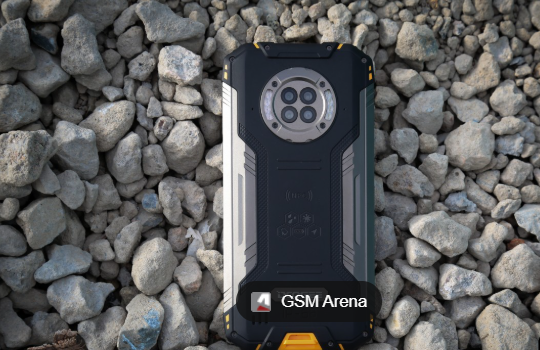
Let's start with the device's size. It has a 6.22-inch screen, weighs 310 grams, and is 15.5mm thick. To put that in perspective: when carrying it in a jeans pocket, the weight drags your pants down, forcing you to pull them up every now and then. A reviewer from Poland described the weight in the pocket as being enough to almost pull the trousers down—a description I find quite accurate. With a width of 81.4mm, it’s nearly impossible for someone with small hands to grip it one-handed, so typing requires two hands.
The casing is a combination of rubber and metal; metal covers more than half of the back, and the camera module is also protected by metal. It is officially rated IP68 and IP69K for water and dust resistance, meaning it can withstand immersion in 1.5 meters of water for 30 minutes and survive drops onto concrete from a height of 1.5 meters. In my own experience, I dropped it from dining-table height two or three times; the frame sustained some scuffs, but the screen didn't break. Another user reported dropping theirs onto concrete from a great height several times without issue; the screen only broke after a period of use, while the phone itself continued to function normally.
Now, let's talk about the night-vision feature—the main reason I bought the phone in the first place.
It features a quad-camera setup on the back: a 48-megapixel Samsung main camera and a 20-megapixel Sony night-vision lens, accompanied by four infrared lights and four LED fill lights. The night-vision lens utilizes the Sony IMX350 sensor. Photos taken in night-vision mode are black and white, allowing you to capture images even in pitch-black environments. I tested it while camping; in the pitch-black night, the phone screen revealed the outlines of trees and rocks that were invisible to the naked eye. The resulting photos lacked fine detail and had noticeable noise, but the subjects were clearly identifiable. A ZDNet review noted that this night-vision feature was a standout among rugged phones at the time; the main camera uses the S5KGM1SP03-FGX9 sensor.
Daytime photography is average; the 48-megapixel main camera performs decently in good lighting, while the 8-megapixel ultra-wide and 2-megapixel macro lenses are functional but unremarkable. One user described it as "an average camera, but sufficient for work," which sums it up well.
In terms of performance, it runs on the MediaTek Helio G90 chipset with 8GB of RAM and 128GB of storage (Samsung UFS). It handles daily tasks without lag and runs games smoothly. One user reported playing *Diablo*, *PUBG*, and *Wild Rift* at maximum settings without the phone overheating. I don't game myself—I mostly watch videos, use WeChat, and take photos—and it handles these tasks perfectly. It scored 1,309 in the 3DMark Wild Life benchmark with 95% stability.
It features a 6,350mAh battery supporting 24W wired fast charging and 10W wireless charging. When new, it lasted two days with normal use; after over a year, it lasts about a day and a half. One user reported the battery was still excellent after four years, allowing for hours of gaming on a full charge. However, others have reported the battery draining in half a day, as well as issues with the charging port and wireless charging functionality. These inconsistencies likely stem from individual unit quality control.
The display is a 6.22-inch IPS LCD with a resolution of 1520×720 (270 ppi). To be honest, this resolution was a bit low for 2020—TechRadar’s review specifically criticized it. You can see some graininess in text if you look closely, though video playback looks fine. However, the brightness is sufficient for outdoor use; the screen remains visible in direct sunlight, which is more important than resolution for outdoor users. Now, let’s talk about a few aspects that aren't particularly pleasant to use.
The USB-C charging port is tucked under a rubber flap; the opening is very narrow, meaning only slim cables fit, and the connection is easily interrupted by the slightest bump. Reviewers have specifically criticized this design. The four side buttons feel loose; they are easily triggered by accident when handling the phone, and they rattle audibly when the phone is mounted in a car holder. The speaker quality is poor, with noticeable distortion at volumes above 80%. One user who owned the device for four years noted that the USB port's sealing ring prevents headphone plugs from seating fully, making the headphone jack prone to failure over time.
It runs on Android 10; there have been virtually no major system updates since launch, and security patches are not timely. One user flatly stated, "I won't buy DOOGEE again because the system support is terrible." This is a significant downside for anyone who prioritizes system security updates.
As for the price, it launched at around $299. The device is now discontinued, though it occasionally appears on the second-hand market at a much lower price. Among rugged phones in this price range, Ulefone and Blackview offer products with similar specs, but few actually include night-vision capabilities.
After using it for over a year, my impression is that this device suits a specific type of user. If you frequently work outdoors or on construction sites—or if, like me, you’re clumsy and constantly drop your phone—its ruggedness and night-vision features are genuinely useful. However, if you’re just using the phone for everyday city life, the 310g weight and 720p screen might make for an uncomfortable experience. It lacks refinement and has some rough edges, but it certainly delivers on its core promise of durability and that night-vision feature.
DOOGEE 6350mAh/24.45WH 3.85V BAT20ZN1296350 Battery
|
|
【キーワード】
登録されていません
|

|
  |

|
ブログ? そんなの必要ありません! 今日から、いきなりアフィリエイトスタート!
【まにあ道アフィリエイト】まにあ道ならAmazonアソシエイトIDを利用してネタを書くだけで、お気軽に始めていただけます。


 New Battery Surveying Equipment Batteries Topcon 7.2V 1400mAh/10.08Wh(0)





 シュリのおすすめネタ
 この道場の人気ネタ
-

New battery BA-0156A0 6000mAh/23.1Wh 3... -
New battery BAT21ZN1336000 6000mAh/23.... -
New Battery Laptop Batteries DELL 7.4V... -
Is a 2016 4K convertible laptop still ... -
New Battery Surveying Equipment Batter...
このネタをソーシャルブックマークに登録する
 まにあ道の人気ネタ
-
altissima qualità Batteria per AS... -
Acheter une RUGGEAR BL500IP Batterie S... -
Batería para DELL J7HTX 4342mAh/3... -
Buy RECENT RB-35 RECENT 7.4V 1150mAh/... -
日本煙油的口味選擇:經典與創新風味的完美搭配
コメントはまだありません。